Why Learning the Aleph-Bais Is Your Child's Greatest Adventure
Meir
2026-03-30T09:43:25.554Z
by Meir on Mar 30, 2026Share
## The Letter That Started It All
There is a moment every Jewish parent treasures — the first time their child points to a letter and says its name. That moment, small as it seems, is the opening note of a lifelong symphony. Learning the Aleph-Bais is not simply about memorizing twenty-two shapes. It is about handing a child the key to the entire Torah, to tefillah, to a heritage stretching back thousands of years.
And it all begins with Aleph.
## Why Aleph Is Such a Remarkable First Letter
Most children's alphabets begin with a letter that makes a bold, obvious sound. But the Hebrew Aleph is different — it is silent. On its own, without a vowel, Aleph makes no sound at all. Yet it stands first among all the letters.
There is deep wisdom hidden in that silence. Before a child can speak, they must listen. Before they can read, they must observe. Aleph teaches, from the very first lesson, that greatness does not always announce itself loudly. Humility and attentiveness come first.
When Aleph receives its vowel marks — its nekudos — it finally finds its voice. That transformation mirrors the journey every young learner takes: quiet at first, absorbing, watching, and then one day reading words, sentences, and whole parashot with confidence and joy.
## Learning Through Story: Avi, His Abba, and the Esrog
One of the most beautiful ways to introduce young children to learning the Aleph-Bais is through storytelling. In a memorable lesson taught by Morah Chaya Shapiro, children meet a boy named Avi who is helping his Abba prepare for Sukkos. While his father is busy, Avi notices a special box he has been asked not to open. But curiosity gets the better of him, and inside he discovers a precious Esrog.
When his Abba returns, Avi faces a choice. He could say nothing. He could hope no one would notice. But instead, Avi chooses Emes — truth. He tells his father exactly what happened, even though he is nervous about how his father will respond.
His Abba's reaction is everything. Though he is disappointed that Avi opened the box, he is genuinely proud that his son told the truth. That pride matters more than the mistake.
Notice what every key word in this story has in common: **Abba, Avi, Esrog, Emes** — every single one begins with Aleph. The lesson is woven so naturally into the story that children absorb the letter and its meaning at the same time. They are not just learning a shape on a page. They are learning that Aleph is connected to honesty, to family, to doing the right thing even when it is hard.
This is the genius of meaningful early Torah education.
## The Honey on the Letters
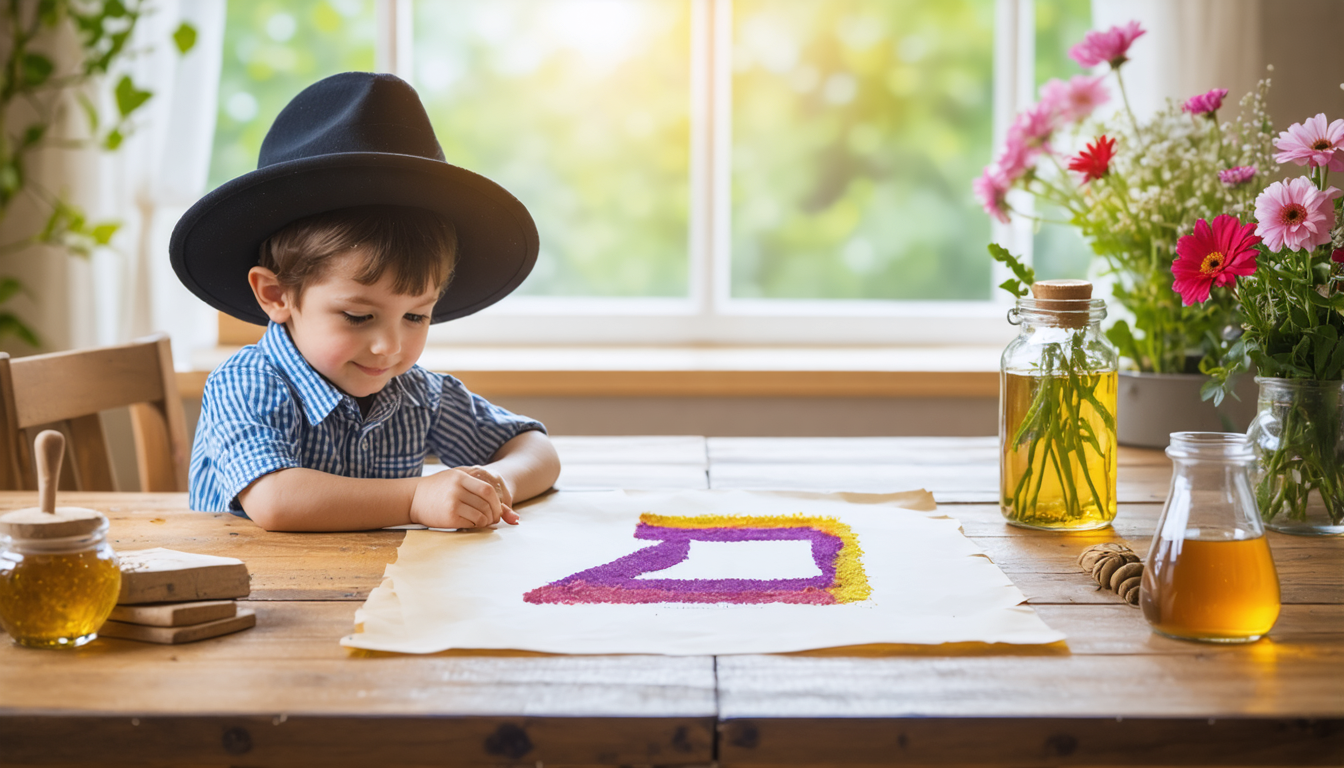
There is an ancient Jewish custom of placing honey on the letters of the Aleph-Bais when a child first begins to learn them. The child tastes the sweetness and understands, in the most direct way possible, that Torah learning is a sweet experience.
This custom is not merely symbolic. It shapes the emotional landscape of a child's entire relationship with learning. A child who first encounters the Aleph-Bais through warmth, story, song, and celebration will carry that positive association for life. Learning feels like a gift, not a burden. The beis midrash is a place of joy, not dread.
On the other hand, children who experience their earliest learning as repetitive, joyless drilling may spend years trying to overcome that first impression. The early lessons matter enormously — not just for what is taught, but for how it feels to learn.
## What Good Aleph-Bais Teaching Actually Looks Like
Teachers who have spent years in early childhood Torah education understand that young children learn through their whole bodies, not just their eyes. Movement, music, and narrative are not distractions from learning — they are the learning.
Effective Aleph-Bais instruction typically includes:
**Songs and melodies** — Children's brains are wired to retain information set to music. A simple tune connected to each letter becomes a memory hook that lasts for years.
**Stories with meaning** — Rather than abstract drill, each letter comes alive through a narrative. When Aleph means Abba and Emes and Avi, it stops being a symbol and becomes part of the child's world.
**Physical engagement** — Having children form letters with their bodies, trace them in sand, or stamp them on paper connects the visual with the kinesthetic and makes the learning stick.
**Repetition without tedium** — Young children need to encounter new information many times before it becomes automatic. The art of great teaching is making each repetition feel fresh, fun, and worth doing again.
**Emotional connection** — The most powerful lessons have a feeling attached to them. Avi's courage in telling the truth creates a small emotional charge that anchors the memory of Aleph in a child's heart.
## The Role Parents Play at Home
School and formal learning are important, but the home environment is where children's attitudes about Torah are truly shaped. Parents who learn Aleph-Bais alongside their children send an unmistakable message: this matters to me too.
Here are some simple ways to extend Aleph-Bais learning at home:
**Go on an Aleph hunt.** After learning the first letter, challenge your child to find Aleph in a siddur, on a cereal box, or on a sign. Turning learning into a game builds excitement and reinforces the letter in new contexts.
**Tell the story again.** Ask your child to retell you the story of Avi and the Esrog. Children who can narrate a lesson back to a parent have internalized it far more deeply than those who simply listened once.
**Connect the letter to your daily life.** When you eat an apple (tapuach — which also begins with Aleph), mention it. These small connections build a web of associations that make the letter feel familiar and real.
**Celebrate every milestone.** When your child learns a new letter, make it an event. A small treat, a special sticker, a warm word of praise — these signals tell a child that this learning is genuinely worth celebrating.
**Watch together and talk about it.** When your child watches educational Torah videos designed for young learners, sit with them when you can. Ask questions afterward. Show curiosity. Your engagement validates theirs.
## The Bigger Picture: What the Aleph-Bais Opens Up
It can be tempting to see the Aleph-Bais as a simple, preliminary step — something to get through quickly before the real learning begins. But nothing could be further from the truth.
Every bracha a child will ever recite begins with these letters. Every Shabbos zemiros, every line of davening, every word of Chumash or Gemara — all of it rests on the foundation built in those early Aleph-Bais lessons. The child sitting with a patient teacher, learning to trace the curve of an Aleph, is building the runway for a lifetime of Torah.
The Vilna Gaon reportedly said that every letter of the Torah contains worlds of wisdom. If that is true, then each letter a child learns is not a step toward something important — it is something important in itself.
When Avi chose Emes over silence, he demonstrated what the Aleph can mean: that truth is not always easy, but it is always worth it. That lesson, taught through a simple story to a young child learning their very first letter, is more than a memory aid. It is a value being planted in fertile soil.
## Beginning the Journey
If your child is just beginning to learn the Aleph-Bais, you are standing at one of the most meaningful moments in their Jewish life. What happens in these early lessons will echo for decades.
Choose teachers and learning materials that treat young children as capable of real understanding. Look for stories with moral weight, songs with genuine warmth, and approaches that connect letters to the values and language of Jewish life.
And when your child comes home and draws a lopsided Aleph on a piece of paper, hang it on the refrigerator with pride. They have just taken the first step on the greatest adventure of their lives.

sign up today
and watch Torah come alive.
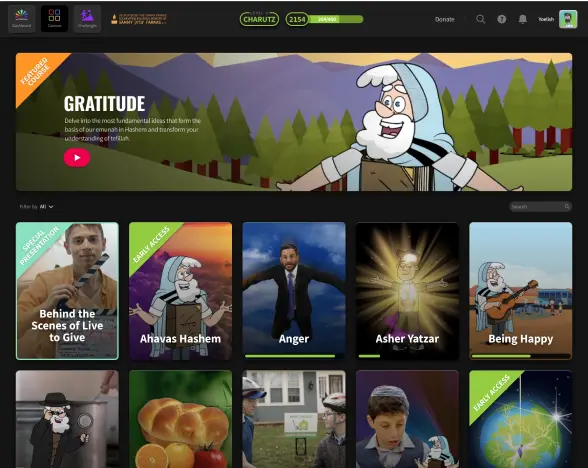
Engaging, enriching Torah videos
Relevant and relatable courses for today’s kids
100% guilt-free screen time (buh-bye, Minecraft)