
Respecting others isn't optional — it's a Mitzvah
What if the way you speak to someone — or even the way you look at them — could be a Mitzvah or an Aveirah? Most of us walk through life assuming we're pretty decent people. We hold doors open, say "good Shabbos," and drop coins into Tzedakah boxes. But when it comes to respecting others — especially those whose challenges are visible — we often stumble without even realizing it.
And that gap between our good intentions and our actual behavior? That's exactly where the Torah asks us to grow.
They are people, not disabilities
Let's start with something deceptively simple. When you see someone in a wheelchair, what registers first — the person or the wheelchair? When you meet someone with Down Syndrome, do you see a human being with a full inner world, or do you see a condition?
The answer matters more than you think. Because the moment we reduce a person to their limitation, we've already failed at one of the most basic principles in Pirkei Avos. Ben Azzai teaches that every single person deserves respect — not because of what they can do, but because of who they are: a creation of Hashem, made B'Tzelem Elokim.
People with disabilities are whole people. They have opinions, preferences, humor, and dignity. They want to be treated with the same respect you'd want for yourself. That's not a modern idea. That's the Torah.
The small things that aren't small at all
Here's where it gets practical — and a little uncomfortable. Because respecting others with disabilities isn't just about having the right attitude. It's about the dozens of micro-decisions we make in everyday interactions.
Don't patronize. That means no patting someone on the head, no baby-talk voice, no assuming that an adult with a disability is a child. Adults are adults, regardless of their challenges. Talking down to someone doesn't make you kind. It makes you disrespectful.
Don't assume they need your help. If you see someone who might benefit from assistance, ask. A simple "Can I help you with that?" gives them the dignity of choice. Some people want help. Others don't. They want to do it themselves — and that's their right.
Don't talk around them. This one is surprisingly common. Someone is sitting right there in their wheelchair, and you turn to their aide and ask, "Is she going to be joining us?" The person is right there. Talk to them. Address them. They're not invisible just because they have someone assisting them.
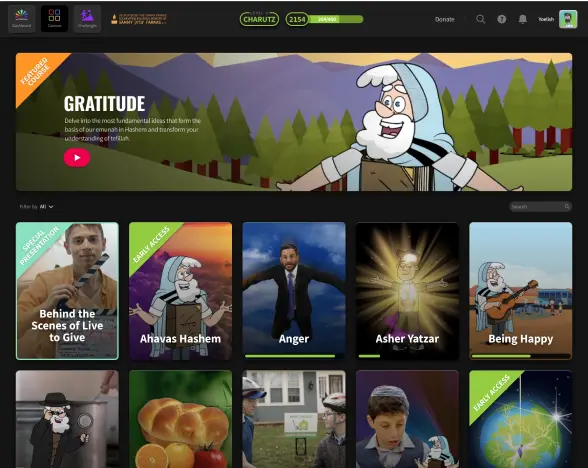
Torah Live's video on respecting others brings these moments to life in a way that's both eye-opening and practical — showing exactly what respect looks like (and what it doesn't) in real-life situations.
Watch your words — but don't overthink it
Language is powerful. The Torah knows this better than any modern sensitivity training ever could. Ona'as Devarim — hurting someone with words — is a serious Aveirah. And when it comes to people with disabilities, our words carry extra weight.
Rule one: don't bring up the disability unless the person does. It's not your conversation to start. You wouldn't walk up to someone and say, "So, about your financial problems…" The same principle applies here. If it fits naturally into the conversation and they bring it up, fine. But it's not for you to say, "So, being in that wheelchair, have you ever noticed…"
At the same time, don't tie yourself in knots. If you're talking to someone in a wheelchair and you say, "I've gotta run" — relax. If you say "see you later" to someone who's visually impaired — it's fine. These are expressions. People understand that. You don't need to bend over backwards avoiding common phrases.
The balance is straightforward: be natural and respectful. Don't be careless, but don't be so careful that you become awkward. Treat the person like a person, and the words will usually take care of themselves.
The Mitzvah of listening — especially when it's hard
Here's a test of character that most of us face at some point. You're talking with someone who speaks slowly — maybe they've had a stroke, maybe they have a condition that affects their speech. It takes time. Your mind starts to wander. You glance at your phone.
Stop.
Giving someone your full, undivided attention is one of the purest forms of Kavod HaBriyos — honoring Hashem's creations. The Gemara is filled with examples of Chachamim who listened patiently, who gave time and space for every person to express themselves.
As the video points out, we used to call people who took their time before speaking "thoughtful." The fact that someone's words come slowly doesn't make those words less valuable. And it certainly doesn't reduce your obligation to hear them with patience and respect.
Rabbi Wolbe writes extensively about the Middah of Savlanus — patience — as a cornerstone of character development. It's easy to be patient with people who are convenient. The real growth happens when patience costs you something: your time, your comfort, your schedule.
Don't stare — and teach your children why
Little children point. They stare. They say things like, "Look at that man! He doesn't have a leg!" That's normal for a small child — they haven't yet learned to filter their observations.
But here's the thing: if you're not a small child, you should be able to figure this out.
Don't stare at someone with a visible disfigurement or disability. Don't let your gaze linger. And when your children do what children do, use it as a teaching moment. Gently, quietly: "I know he looks different, but we don't want to make him feel uncomfortable."
The Gemara asks a beautiful question: Why does every person look different? Because every person has a different purpose in this world. Some people are tall, some short. Some are strong, some face physical challenges. Some breeze through academics, others struggle for every grade. Hashem created each person with exactly the package they need for their unique mission.
When we internalize this, staring stops making sense. You don't stare at a screwdriver because it's not a hammer. Each tool has its purpose. Each person has theirs.
The bigger picture: Klal Yisrael needs everyone
This isn't just about being polite. It's about something much deeper.
The Jewish people are one body. The Torah compares us to a single organism — and just like a body needs every organ, Klal Yisrael needs every member. You can't look at someone's abilities or limitations and decide whether they matter. Every single person has something to contribute, and it's our job to make sure they have the access and opportunity to do it.
Rabbi Dessler teaches that the highest form of giving is seeing another person's needs before they have to ask. When it comes to inclusion, that means building communities where people with disabilities don't have to fight for a seat at the table — because we've already set one for them.
You don't know who's going to make the contribution that changes everything. The quiet person in the corner. The young man who struggles to speak. The woman in the wheelchair. Hashem distributes gifts in ways we can't predict. Our job isn't to judge the packaging. Our job is to make room.
Five things you can do today
Ask before you help. Next time you see someone who might need assistance, pause. Ask them directly — not their companion — whether they'd like a hand. Respect their answer either way.
Speak to the person, not around them. Make a conscious effort to address people with disabilities directly. Look them in the eye. Use their name. Treat every conversation as you would with anyone else.
Practice patience in conversation. When someone speaks slowly, give them your full attention. Put your phone away. Resist the urge to finish their sentences. This is Kavod HaBriyos in action.
Teach your children gently. When a child stares or points, don't scold — guide. Explain that Hashem made every person different for a reason, and our job is to make everyone feel comfortable and welcome.
Check your community's accessibility. Look around your Shul, your school, your Shabbos table. Is there room — literally and figuratively — for people with disabilities? If not, be the person who starts that conversation.
It starts with how you see yourself
Here's a thought worth sitting with. The video makes a profound point: if I learn to appreciate myself — with all of my own limitations — I can appreciate others. Every one of us has areas where we struggle. Things we can't do. Challenges that feel unfair.
The difference is that some limitations are visible and some aren't. But Hashem gave each of us the exact set of strengths and weaknesses we need. When you truly believe that about yourself, it becomes natural to believe it about everyone else too.
There will come a time, Chazal tell us, when all suffering and limitation will be healed. But right now, in this world, our Avodah is clear: see every person as Hashem sees them — complete, purposeful, and deserving of respect.
So the next time you interact with someone whose challenges are visible, remember: respecting others isn't a nice extra. It's the foundation of what it means to be part of Klal Yisrael.
Want to bring these lessons home in a way your whole family will remember? Torah Live's award-winning videos, games, and interactive challenges make Torah values come alive — no lectures, just real inspiration. Sign up for free and turn screen time into something truly meaningful.