The Torah's last Mitzvah is one you've probably never done
Here's something that might stop you mid-sip of your morning coffee: the very last Mitzvah in the entire Torah — number 613, the grand finale — is to write a Sefer Torah. Not to keep Shabbos. Not to love your neighbor. To write a Torah scroll. And if you're like most of us, you've never done it.
So what does that mean for us today? And why would Hashem place this particular Mitzvah at the very end, like the closing note of a symphony?
The Torah isn't a textbook — it's a song
The passuk says it plainly: V'atah kitvu lachem es hashirah hazos — "Now, write this song for yourself" (Devarim 31:19). Notice the word the Torah uses. Not "book." Not "document." Song.
That's a powerful choice. A textbook delivers information. A song does something else entirely. It reaches into you — past the logic, past the routine — and stirs something that's hard to put into words. Think about a niggun at a Shabbos table. You don't analyze it. You feel it.
The Torah is telling us: this is what I am. I'm not just laws and narratives bound in parchment. I'm a melody that touches the deepest part of your Neshamah. And Hashem is asking each of us to take part in writing that song — to make it ours.
That's what bar mitzvah boy Elitzur stumbles onto at the start of his journey into the world of the Sefer Torah. His father teaches him this passuk, and suddenly, the last Mitzvah in the Torah isn't just an ancient obligation. It's an invitation.
But wait — who actually learns from a scroll?
Elitzur asks exactly the question you might be thinking: "Daddy, I've never seen anybody learning out of a Sefer Torah." Fair point. We learn Gemara from a Gemara. We learn Halacha from the Shulchan Aruch. We learn Chumash from a Chumash. Nobody sits in the Beis Midrash unrolling a Torah scroll to look up a Tosafos.
This isn't a new question. Rabbeinu Asher — the Rosh, one of the great Rishonim whose rulings shape Halacha to this day — addressed it directly. He explains that the original Mitzvah of writing a Sefer Torah was given when people actually studied directly from Torah scrolls. That was the primary way to access the Torah's wisdom.
But now? Now we study from Chumashim, Mishnayos, Gemaros, and their commentaries. So the Rosh writes that the Mitzvah extends to producing these Sefarim as well — any Torah works that help people learn and grow.
Think about that for a moment. The Mitzvah isn't frozen in time. Its core purpose — making Torah accessible so people can learn from it — travels with us through every generation.
What this Mitzvah really asks of you
Rabbi Dessler, in Michtav Me'Eliyahu, teaches that every person stands on a spectrum between giving and taking. The giver looks outward, asking, "What can I contribute?" The taker looks inward, asking, "What can I get?"
Writing a Sefer Torah — or supporting Torah learning in any form — is one of the purest acts of giving. You're not writing it just for yourself. The passuk continues: V'lamdah es Bnei Yisrael, simah b'fihem — "And teach it to the Children of Israel, put it in their mouths." You write it so others can learn. You create it so the song keeps playing.
This is why a Hachnasas Sefer Torah — the dedication of a new Torah scroll — is one of the most joyous celebrations in Jewish life. It's not just about the scroll. It's about what that scroll represents: another channel through which Torah flows to Klal Yisrael. Another voice added to the song.
And you don't have to be a Sofer to participate. Every person who contributes to the writing of a Sefer Torah, who purchases Sefarim for a shul or a school, who supports any effort that brings Torah learning to others — is fulfilling the spirit of this extraordinary Mitzvah.
A bar mitzvah boy's brilliant idea
Back to Elitzur. After learning about the Rosh's explanation — that the Mitzvah today includes creating materials people can learn Torah from — he has a flash of inspiration. "Daddy, would it also be a Mitzvah if we wrote something else that we could learn the laws and Mitzvos from?" His father says yes. And Elitzur's answer? "A movie."
There's something wonderful about this moment. A 12-year-old boy takes a 3,000-year-old Mitzvah and asks: how does this apply to me, right now, in my world? That's not chutzpah. That's exactly what the Torah wants from us. Every generation has to ask: how do we keep the song alive with the tools we have today?
For the generation of Moshe Rabbeinu, it was scrolls. For the Rishonim, it was handwritten manuscripts. For the Acharonim, it was printed Sefarim. And for us? It might be a video that brings the beauty of a Sefer Torah to someone who has never seen a Sofer dip his quill into ink.
The Sefer Torah as a mirror
There's another layer here that's easy to miss. The Mitzvah says kitvu lachem — write it for yourself. Not just "write it." For yourself. The Torah is asking for a personal connection. It's asking you to own it.
Rabbi Wolbe, in Alei Shur, emphasizes that true spiritual growth begins with self-awareness — with honestly examining where you stand and where you need to go. A Sefer Torah, in a sense, is a mirror. It reflects back the person you could become if you lived by every word written on that Klaf.
When a Sofer sits down to write a Sefer Torah, he doesn't just copy letters mechanically. Every letter must be written with intention. Every word with Kedushah. The Sofer must say Hashem's name out loud before writing it, declaring his intention to sanctify it. There are no shortcuts. There is no autopilot.
Isn't that exactly how we should approach our own Avodas Hashem? With intention. With care. Letter by letter, day by day, building something sacred.
Five ways to connect with this Mitzvah today
Contribute to the writing of a Sefer Torah. Many communities and organizations offer the opportunity to sponsor a letter, a word, or a Parsha. Even a single letter connects you to this Mitzvah. Ask your Rav how to get involved.
Fill your home with Sefarim. The Rosh teaches that acquiring Torah books for study is a fulfillment of this Mitzvah. Build a library — even a small one — that your family can learn from. A Chumash, a Mishnayos, a Halacha Sefer. Start somewhere.
Support Torah education for others. Sponsoring Torah learning materials for a school, a shul, or a family that can't afford them is a direct extension of v'lamdah es Bnei Yisrael. You're putting Torah in someone else's mouth.
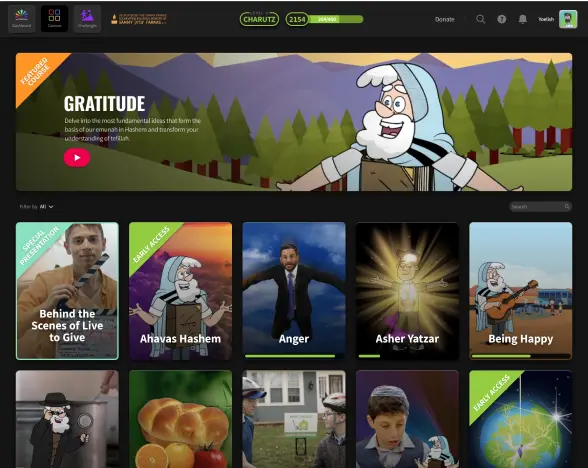
Learn about the Sefer Torah itself. Understanding the painstaking process — from preparing the Klaf to crafting the quill to mixing the ink — deepens your reverence every time you stand for Krias HaTorah. Watch Torah Live's Sefer Torah series with your family and see this ancient craft come to life.
Treat Krias HaTorah as a personal encounter. Next time the Sefer Torah is taken out in shul, don't let your mind wander. Remind yourself: this is the song Hashem wrote for me. Listen to it as if you're hearing it for the first time — because in a way, you are.
The song that never ends
The Torah chose to close with this Mitzvah for a reason. It's not just a commandment — it's a mission statement. Keep writing. Keep teaching. Keep the song going. Every generation gets to add its voice.
Elitzur understood this instinctively. A bar mitzvah boy picked up a phone, called Torah Live, and said, "I'd like to make a movie about writing a Sefer Torah." And just like that, the oldest Mitzvah met the newest technology — and the song kept playing.
So here's the question for you: what's your part in the song?
Ready to experience the beauty of the Sefer Torah up close — without leaving your living room? Torah Live's stunning videos, interactive challenges, and quizzes bring this Mitzvah to life for the whole family. Sign up for free and turn screen time into something your Neshamah will thank you for. 🎬✨