 Dashboard
 Challenges
'%3e%3cpath%20fill-rule='evenodd'%20clip-rule='evenodd'%20d='M27.727.924a9919.468%209919.468%200%2001-6.454%200c-3.189%200-6.378%200-9.568.003-.45%200-.904.01-1.351.056-2.424.25-4.587%201.109-6.405%202.677C.838%206.345-.442%209.717.134%2013.685c.405%202.78%201.801%205.087%204.068%206.86%202.55%201.995%205.487%202.801%208.755%202.416%202.548-.3%204.744-1.335%206.573-3.06a5.338%205.338%200%20011.25-.893c1.546-.786%203.163-1.123%204.896-.697.921.226%201.773.6%202.446%201.25.83.8%201.716%201.52%202.746%202.07%202.702%201.446%205.57%201.818%208.546%201.068%205.582-1.408%209.145-6.447%208.514-11.942-.3-2.61-1.44-4.84-3.385-6.667C42.29%201.973%2039.557.932%2036.406.926%2033.513.922%2030.62.923%2027.727.924zM10.012%207.382h3.428v3.41h3.432v3.407H13.44v3.408h-3.43V14.2H6.587v-3.408h3.426V7.382zm21.783%207.242a2.564%202.564%200%20002.572-2.556%202.564%202.564%200%2000-2.572-2.557%202.564%202.564%200%2000-2.571%202.557%202.564%202.564%200%20002.571%202.556zm11.142-2.556a2.564%202.564%200%2001-2.572%202.556%202.564%202.564%200%2001-2.571-2.556%202.564%202.564%200%20012.571-2.557%202.564%202.564%200%20012.572%202.557z'%20fill='url(%23prefix__paint0_linear_4494_7117)'/%3e%3c/g%3e%3cdefs%3e%3clinearGradient%20id='prefix__paint0_linear_4494_7117'%20x1='24'%20y1='.923'%20x2='24'%20y2='23.077'%20gradientUnits='userSpaceOnUse'%3e%3cstop%20stop-color='%23FEA345'/%3e%3cstop%20offset='1'%20stop-color='%23FF8200'/%3e%3c/linearGradient%3e%3cfilter%20id='prefix__filter0_i_4494_7117'%20x='0'%20y='.923'%20filterUnits='userSpaceOnUse'%20color-interpolation-filters='sRGB'%3e%3cfeFlood%20flood-opacity='0'%20result='BackgroundImageFix'/%3e%3cfeBlend%20in='SourceGraphic'%20in2='BackgroundImageFix'%20result='shape'/%3e%3cfeColorMatrix%20in='SourceAlpha'%20values='0%200%200%200%200%200%200%200%200%200%200%200%200%200%200%200%200%200%20127%200'%20result='hardAlpha'/%3e%3cfeOffset%20dy='-1'/%3e%3cfeComposite%20in2='hardAlpha'%20operator='arithmetic'%20k2='-1'%20k3='1'/%3e%3cfeColorMatrix%20values='0%200%200%200%200%200%200%200%200%200%200%200%200%200%200%200%200%200%200.1%200'/%3e%3cfeBlend%20in2='shape'%20result='effect1_innerShadow_4494_7117'/%3e%3c/filter%3e%3c/defs%3e%3c/svg%3e) Games
Games Impact Store
The Torah's blueprint for a nation that actually lasts
Meir
2026-03-23T17:29:10.399Z
by Meir on Mar 23, 2026Share
What if the most sophisticated system of governance, ethics, and social welfare ever devised wasn't written by a political theorist — but was given at Sinai over 3,000 years ago?
That's exactly what you find in Devarim chapters 11 through 19. These nine chapters lay out a divine blueprint that covers everything — from what you eat to who leads you, from how you give Tzedakah to where you run when life falls apart.
## The choice that changes everything
It all begins with a choice. In Devarim chapter 11, Moshe Rabbeinu presents the Jewish people with the starkest possible fork in the road: blessing or curse. Keep the Mitzvos and the land will flourish. Ignore them, and you lose everything.
This isn't a threat. It's a description of reality. The Torah is telling us that our choices have real consequences — not just for us personally, but for the entire nation. Har Gerizim and Har Eival stood as physical reminders of this truth, with half the nation on one mountain hearing blessings, the other half hearing curses, and the Levi'im standing in the valley between them.
Before Bnei Yisrael even settled into their new home, Hashem made sure they understood the fundamental principle: your future depends on your choices — not on luck or circumstances, but on what you decide to do with the Torah you've been given.
## You are what you let in
The next chapters get specific about what should and shouldn't enter your life — starting with destroying every trace of Avodah Zarah in Eretz Yisrael, then moving through the laws of Shechitah, Bikkurim, and the prohibition of Ever Min HaChai.
Before listing a single forbidden food, the Torah declares "Banim atem LaHashem Elokeichem" — you are children of Hashem. This isn't conditional on your behavior; a father remains a father regardless of what his child does. The Torah places this statement right before the Kashrus laws because understanding who you are determines how you live. When you know you're a child of the King, you start paying attention to what enters your life.
Kashrus isn't merely a dietary restriction; it's divine guidance about what belongs inside a person who carries a Neshamah.
## A society built on generosity
The Torah then shifts from the personal to the communal in chapter 15, introducing Shemitah — the radical practice of stopping all agricultural work every seventh year and cancelling all debts. Alongside this comes the Mitzvah of Tzedakah, with an explicit warning against refusing to give.
The Torah doesn't just encourage generosity; it weaves it into the nation's economic structure. You can't cling to wealth when the system resets every seven years, and you can't ignore the poor when the Torah forbids hardening your heart against them. Even the Eved Ivri — the indentured servant — is treated with dignity and released with substantial gifts after six years of service.
Chapter 16 brings the Shalosh Regalim — three pilgrimage festivals where every Jewish man journeys to Yerushalayim for Pesach, Shavuos, and Sukkos. Millions streaming toward the Beis HaMikdash on foot, united in joy and gratitude, reminded that they belong to something far greater than themselves. The Torah commands Simchah — happiness on the festival — because a society that celebrates together, gives together, and resets together is one that endures.
## Leadership with real limits
When the Torah describes a Jewish king in chapter 17, it starts not with his powers but with his constraints. He cannot accumulate excessive wives, wealth, or horses that might draw him back toward Mitzrayim. Instead, his central obligation is to write and carry his own Sefer Torah constantly, keeping it with him everywhere except the bathhouse and Mikvah.
This physical presence of the Torah against his body becomes the check on his power. Arrogance cannot take root when Hashem's words are literally bound to him, and his purpose remains anchored in something greater than his authority. A king must not deviate from the Sanhedrin's guidance — this isn't about individual leadership but about a nation thriving through collective wisdom rooted in Torah, not personal opinion.
## Trust over control
The Levi'im receive no land or war spoils, instead sustained by the nation's tithes so they can dedicate themselves fully to service in the Beis HaMikdash, teaching Torah and maintaining the sacred service. Yet chapter 18 then shifts direction with an extensive prohibition against sorcery, divination, necromancy, and every form of fortune-telling.
The juxtaposition is deliberate. The Levi'im embody trust in Hashem's system, while sorcery represents the human impulse to seize control of an unknowable future. The Torah's answer to this anxiety is captured in the phrase "Tamim tihiyeh im Hashem Elokecha" — be wholehearted with Hashem. Walk with Him in simplicity. Accept what unfolds without trying to pierce the veil of tomorrow.
## A place to run
The blueprint concludes in chapter 19 with the Arei Miklat — cities of refuge. If someone accidentally causes another person's death, they have a place to flee, a community to receive them, protection from vigilante justice while their case is properly adjudicated.
This isn't an afterthought. It's the capstone of the entire system. A nation with clear choices, dietary integrity, economic generosity, accountable leadership, and deep trust in Hashem also needs a framework for when things go tragically wrong. The Torah builds in mercy from the very beginning.
## What this means for us today
These nine chapters reveal something remarkable: the Torah doesn't just tell us what to believe. It shows us how to build a world.
Every dimension of life is addressed — the spiritual and the physical, the personal and the national, the festive and the tragic. The recurring thread throughout is that Hashem's guidance isn't meant to restrict us but to shape us into the kind of people and the kind of community that can truly thrive.
The question these chapters leave us with isn't historical. It's immediate: which mountain are we standing on today — and what choices are we making that will determine the answer?

sign up today
and enjoy some Torah Live videos — FREE
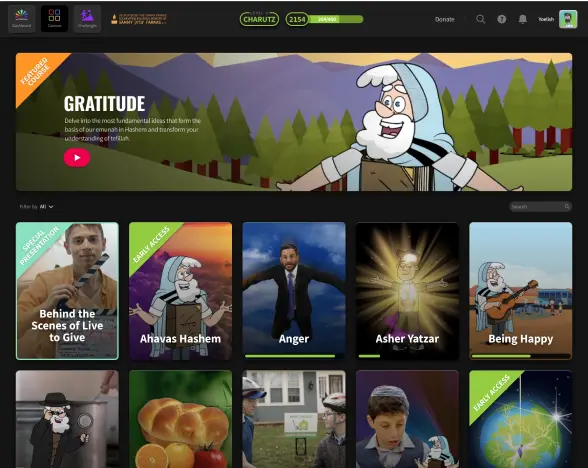
Engaging, enriching Torah videos
Relevant and relatable courses for today’s kids
100% guilt-free screen time (buh-bye, Minecraft)