How a fruit character can teach your child Brachos
What if the secret to teaching your child about Brachos wasn't a lecture — but an adventure starring a girl made entirely of fruit?
That might sound a little strange. But if you've ever watched a young child's eyes light up when a puppet appears or a silly character goes on a quest, you already know the truth: kids learn best when they're having fun. And when it comes to something as foundational as knowing which Bracha to say on an apple, fun isn't a luxury. It's the whole strategy.
Why Brachos matter more than we think
We say Brachos dozens of times a day. For many of us, they've become almost automatic — a quick mumble before biting into a sandwich. But for a young child encountering Brachos for the first time, there's a real sense of wonder baked into the experience.
Think about it from their perspective. You're telling them that before eating a strawberry, they get to talk directly to Hashem — the Creator of the entire universe — and thank Him for that strawberry. That's extraordinary. The Gemara in Brachos (35a) teaches that enjoying this world without making a Bracha is like taking something that belongs to Hashem. When we do say the Bracha, we're invited guests at His table.
That's a concept worth planting early. And just like the apple tree in Torah Live's Ha'eitz video for little ones, it starts with a tiny seed.
Meet Ha'eitz Girl — your child's new teacher
In this charming video from the Lessons for Little Ones series, Morah Chaya introduces Ha'eitz Girl — a character whose head is an orange, whose body is an apple, whose arms are lemons, and whose legs are avocados. She even has almonds for buttons and cherries on her head.
There's just one problem: Ha'eitz Girl doesn't know which "store" she belongs to. So the children help her search. Is it the bakery? No — that's for Mezonos. The candy store? Nope. The winemaker? Close (grapes grow on a tree!), but grape juice and wine get their own special Bracha — Borei Pri Hagafen.
One by one, the options get eliminated. Kids shout "no!" and "yes!" as Ha'eitz Girl bounces from door to door. And when she finally finds her home — the store for fruits that grow on trees — the children have earned that knowledge. They didn't just hear it. They figured it out.
That's powerful teaching. And it mirrors something Rabbi Shlomo Wolbe writes about in Alei Shur: real Chinuch isn't about pouring information into a child. It's about creating an environment where the child discovers the truth on their own.
From seed to tree — a Bracha lesson hidden in nature
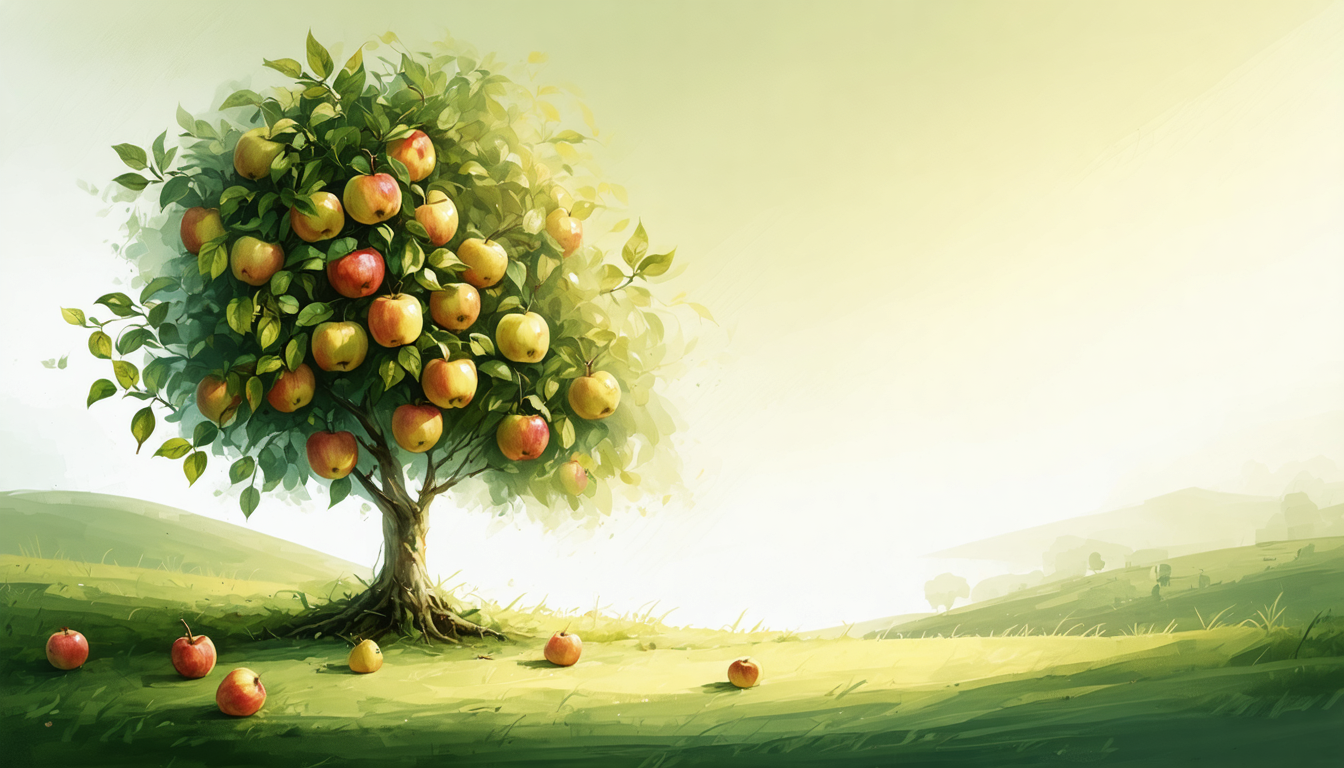
The video doesn't stop at identifying the right Bracha. Morah Chaya takes the children "outside" to watch a tree grow from scratch. First, you dig a hole. Then you plant a seed. Rain falls. Roots spread underground. A stem pushes upward. Flowers bloom. And finally — apples appear.
It's a simple animation, but it carries a deep message. The word "Ha'eitz" isn't random. It literally means "the tree." When we say Borei Pri Ha'eitz, we're acknowledging that Hashem created not just the fruit, but the entire system — the seed, the soil, the rain, the roots, the trunk, the branches, the blossoms — that brought that fruit into our hands.
For a four-year-old, watching that seed become a tree is magical. For us as parents, it's a reminder that the Bracha we rush through at breakfast actually contains a universe of gratitude.
Teaching Brachos to kids: what actually works
If you've ever tried drilling Brachos into a young child through repetition alone, you know it has its limits. Kids might memorize the words, but the meaning slips right through. Here's what the Ha'eitz video gets right — and what you can replicate at home.
Use contrast. The video teaches Ha'eitz by showing what it isn't. Bread? That's Hamotzi. Cookies? Mezonos. Candy? Shehakol. By the time the child reaches Ha'eitz, they've built a mental map of multiple Brachos without even trying. You can do the same at your kitchen table. Lay out an apple, a cookie, a glass of water, and a piece of bread. Ask your child to sort them by Bracha. Make it a game.
Make it physical. Morah Chaya asks children to dig with their hands, to pretend to plant a seed, to shout out answers. Movement anchors memory. Next time you say Ha'eitz with your child, have them reach up high — like they're picking fruit from a tree — before they take a bite.
Connect it to wonder. Don't just teach which Bracha to say. Teach why it matters. "Hashem made this orange just for you. It traveled all the way from a tree to your hand. Isn't that amazing?" A child who feels wonder will want to say the Bracha.
Five things you can do today
Watch the video together. Sit with your child and enjoy the Ha'eitz episode from Lessons for Little Ones. Pause it. Ask questions. Let them shout out the answers.
Play "Find Ha'eitz." Open your fridge or fruit bowl. Ask your child to find every food that gets a Borei Pri Ha'eitz. Apples, pears, oranges, cherries, peaches — let them collect a pile and count how many Hashem created.
Plant something real. Even a small pot with an avocado pit or apple seeds on a windowsill can bring the video to life. Watch it grow over the coming weeks and tie it back to the Bracha.
Create a Bracha chart. Draw four columns on a piece of paper — Hamotzi, Mezonos, Ha'eitz, Ha'adama — and let your child draw or paste pictures of foods in the right column. Hang it where they eat.
Say Ha'eitz with Kavana. The next time you bite into a piece of fruit, slow down. Close your eyes for a moment. Think about the tree, the rain, and the Creator behind it all. Your child is watching — and they'll learn more from your pause than from any worksheet.
Small seeds, big trees
Here's what's beautiful about teaching Brachos to young children: you're not just teaching table manners. You're teaching them that the world has a Creator, that He cares about them, and that every bite of food is a gift worth acknowledging. That's Emunah — planted one orange, one apple, one cherry at a time.
Ha'eitz Girl found her home. And with a little creativity and a lot of warmth, your child can find that same sense of belonging — right there at the kitchen table, fruit in hand, Bracha on their lips.
Ready to turn snack time into a Bracha adventure? Torah Live's Lessons for Little Ones series brings Torah to life with songs, puppets, and characters your kids will adore — all 100% clean and bursting with Yiddishe joy. Sign up free and watch your little ones ask for "just one more episode." 🎬✨