
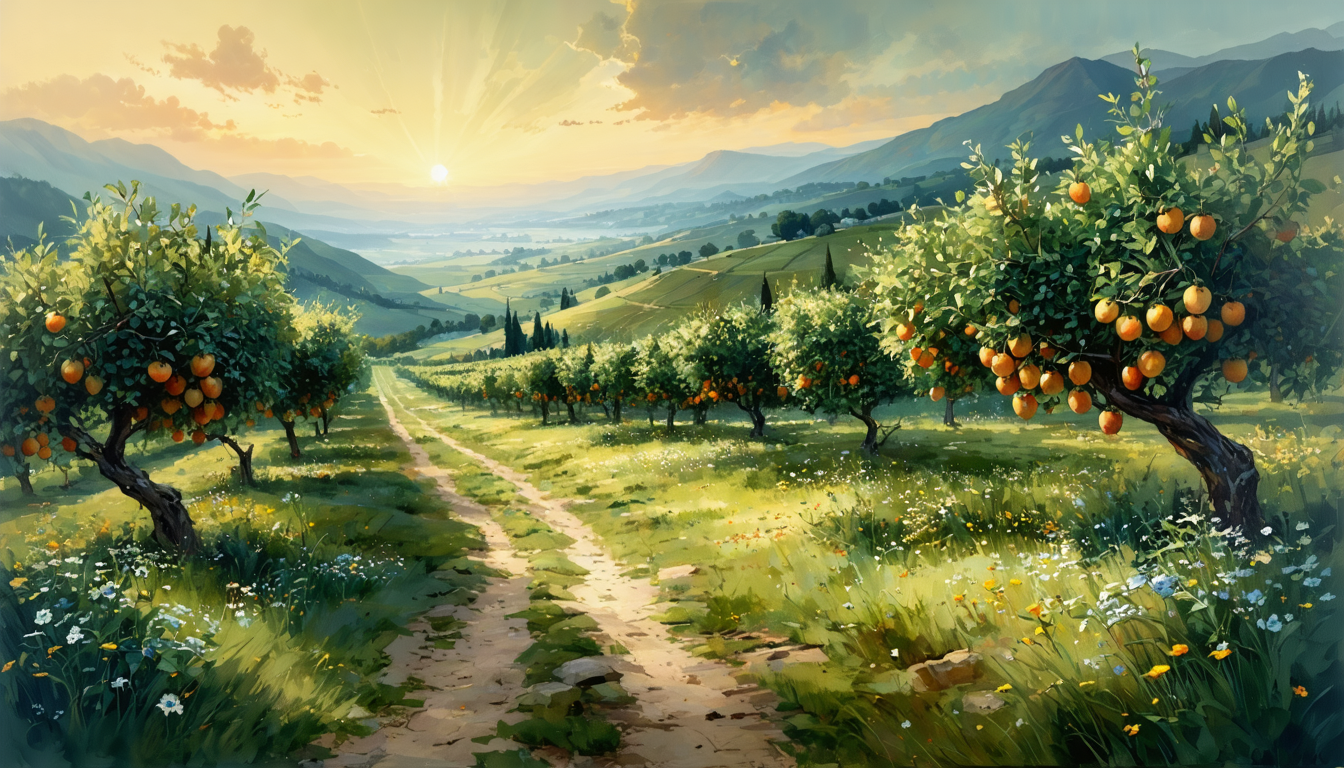
Ever had a ball sail into the branches of a tree, only to remember it's Shabbos and freeze mid-reach? That awkward moment holds a beautiful lesson about how far the Torah goes to protect the holiness of our day of rest. The melacha of kotzer, reaping, teaches us that keeping Shabbos isn't just about the obvious. It's about the fence around the fence.
What reaping on Shabbos actually means
Reaping, or kotzer, is one of the 39 melachos of Shabbos. At its core, it means detaching a plant from its source of growth. That includes picking a fruit, cutting a flower, mowing the lawn, or tearing grass.
Here's a detail that surprises people. Even moving a plant pot from one spot in the room to another is forbidden rabbinically. Why? Because the plant might be drawing nutrients through the pot from its original spot. The Chachamim looked at the smallest ripple effect and said, let's not go there on Shabbos.
The famous 'no climbing trees' rule
To protect the melacha of reaping, the Chachamim made a gezeirah and forbade climbing any tree on Shabbos. You might be a champion climber who's never snapped a twig in your life. Doesn't matter. The rabbis made a blanket prohibition, because someone might accidentally break a branch or a leaf.
This is Torah wisdom in action. Rather than trusting each of us to judge our own skill in the moment, Halacha builds a safe, uniform fence for everyone. If you want to see how these ideas come alive on screen, our video on the melacha of reaping walks you through the dos and don'ts indoors and out.
The tree that's off limits, and everything on it
The decree goes further than the tree itself. You can't use anything attached to the tree either. Jacket hanging on a branch? You can't take it off, or even reach into its pocket. Frisbee stuck up top? You can't shake it loose or knock it down with a stick.
These attached items are called tsidei ha'ilan, the sides of the tree. A hammock tied straight to the trunk falls into this category, so no relaxing in it on Shabbos. But here's a fascinating twist. If you hang the hammock on a hook that's attached to the tree, it becomes tsidei tsidei ha'ilan, the side of the sides, two steps removed. That one you may use, as long as the tree itself doesn't move.
Smell the flowers, not the fruit
The Chachamim even addressed smelling. You may not smell fruit still attached to a tree, since the delicious aroma might tempt you to pluck it right off. But smelling a flower on that same tree? Perfectly fine, because you're unlikely to pick it.
Notice the precision here. The Torah isn't arbitrary. Each fence is placed exactly where human nature needs the extra guardrail. That's the mussar mindset in miniature, understanding ourselves honestly and setting up the right protections before we stumble.
Bring reaping to life this Shabbos
Ready to turn all this into action? Here are simple steps you can take:
Do a quick tree check. Before Shabbos, glance around your yard for balls, frisbees, or clothing that might end up stuck in branches, and clear them in advance.
Rethink your hammock setup. If you love a Shabbos afternoon in the hammock, attach it to a hook or post rather than the tree itself, so it becomes tsidei tsidei ha'ilan.
Move plant pots before candle lighting. If you like rearranging plants, do it Erev Shabbos so you never bump into the melacha of reaping.
Teach the kids the flower-versus-fruit rule. Next Shabbos walk, let them smell the flowers and explain why the fruit stays untouched. A memorable, hands-on Halacha lesson.
Learn one new melacha a week. Pick a single melacha of Shabbos and study it until it's second nature. Steady growth beats cramming every time.
That frozen moment beneath the tree isn't a hassle. It's a sign of how deeply we cherish Shabbos, guarding even its edges. Understanding the melacha of reaping helps you keep Shabbos with more confidence and more joy.
Want to bring these lessons home? Step into Torah Live's world of stunning videos, games, challenges, and quizzes that make learning the melachos of Shabbos genuinely fun, and it's 100% clean and ma'aser approved. Start your family's Torah adventure today and watch Shabbos come alive.