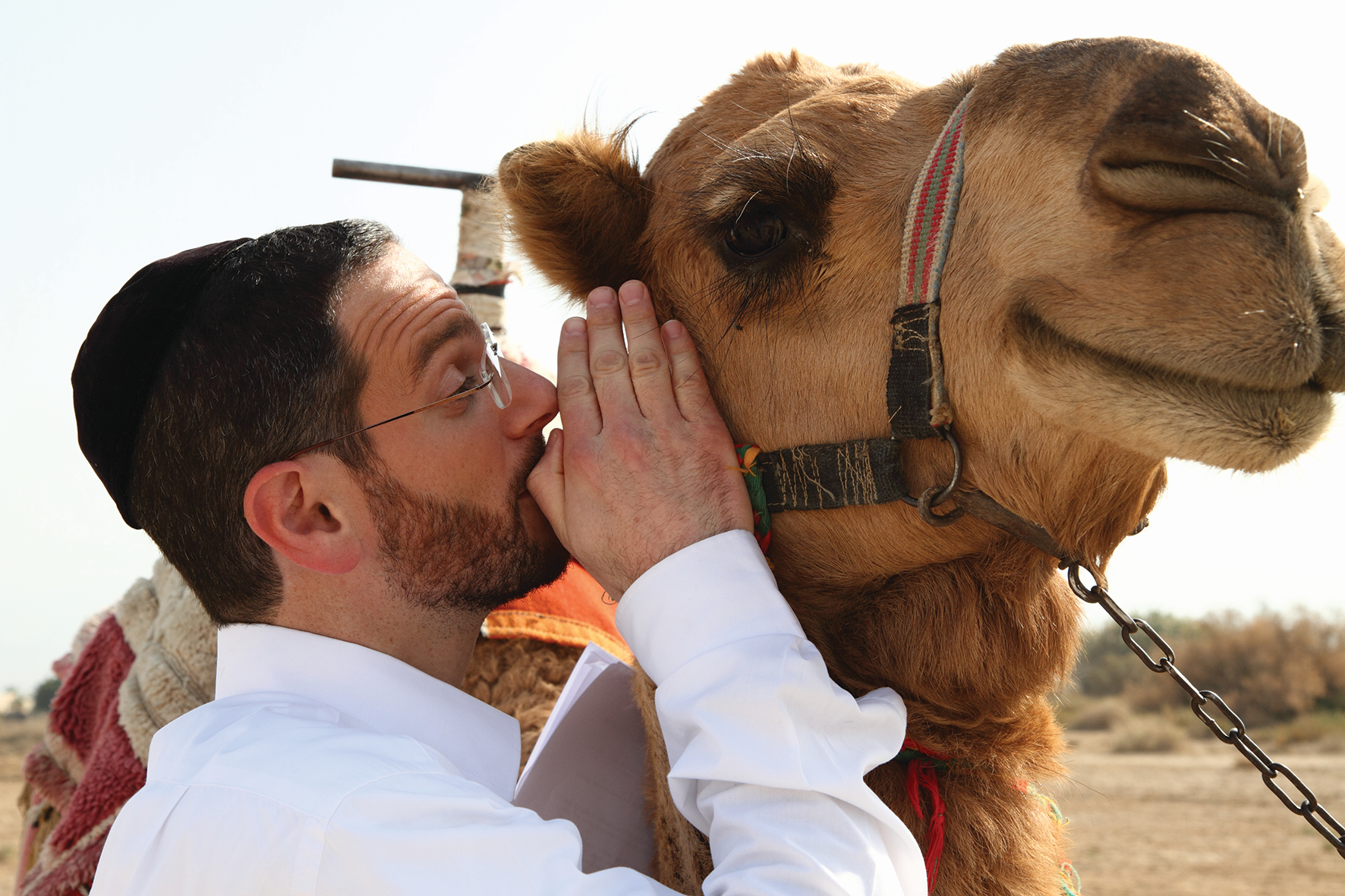
The power of speech in Judaism: words that create
Every child knows the word a magician says just before the trick: abracadabra. Very few people know where it comes from. In the Torah Live video The Power of Speech, we learn that the word is Aramaic. Evra means "I will create," and kedavra means "speech." Put them together and you get something like "I will create with my word."
That stage word turns out to be a faint echo of the very first moments of the world. It also opens the door to one of the deepest ideas in the power of speech in Judaism. Our generation speaks more than any before it. We talk, we type, we send messages that reach dozens of people in a second. So it matters a great deal to know what a word really is.
The world began with words
Let's look at what Chazal teach us about this. The Mishnah in Pirkei Avos (5:1) says ba'asara ma'amaros nivra ha'olam, "with 10 utterances the world was created." Hashem did not build the world with hands or tools. He spoke, and it came to be.
The video draws the lesson straight from there. Just as Hashem's words created the world, your words also have the power to create reality. The magician's word is borrowed, and empty. The Jew's word is real.
The same Mishnah adds something worth noticing. It asks why the world was made with 10 utterances when one would have been enough, and answers that this shows how much the world is worth. Those who damage it carry a heavy responsibility, and those who uphold it earn great reward. A world built by words is a precious thing. So is every word we add to it.
One sentence can change an apple
The video shows this power with a surprising example from halacha: the neder, a vow. English has no exact word for it, because nothing quite like it exists outside the Torah.
The speaker holds up an apple. If a person says that this apple should be forbidden to him the way forbidden foods are forbidden, the apple becomes forbidden to him by Torah law. Eating it would be as serious as eating pork, with the same severity and the same punishment.
Nothing about the apple changed. Same color, same taste, same crunch. A few words were spoken, and its status in the eyes of the Torah was transformed.
Three words that build a home
The video gives a second example. When a man betroths a woman, he says harei at mekudeshes li, "behold, you are betrothed to me." With those words, a bond of marriage comes into being. If that bond is broken improperly, the video notes, the results can be terrible.
Here is the point the speaker draws. Certain words do far more than create a moral duty to keep a promise. They actually change the fabric of creation. A neder changes an object. Kiddushin changes the relationship between two people. Both happen through the mouth.
Why so many mitzvos live in the mouth
Once we see how much rests on speech, the video points out a striking number. Of the 613 mitzvos, it counts 213 that relate to the mouth. That is more than a third of all the mitzvos, tied to one small part of the body.
It makes sense once you think about what the mouth does. With speech we daven, sing Hashem's praise, learn and teach Torah, and offer new insights. We connect to people, encourage them and lift their spirits. We share our deepest hopes and our innermost feelings. We think about the future, discuss ideas and build friendships. The video calls speech the most powerful tool a person has.
It also defines who we are.
A gift breathed in from Hashem
Where does this power come from? The video takes us to the creation of Adam. The Torah says Hashem breathed into him nishmas chaim, the breath of life. Onkelos, in his Aramaic translation of that pasuk, describes the living soul Adam received as ruach memalela, a speaking spirit. Speech is the mark of the neshama.
The video offers a simple picture. When a person breathes out, the breath comes from deep inside him. So too, so to speak, when Hashem breathed into man, He breathed from His own Essence. That is why our speech carries a spark of the same creative power that made the world. It is a Godly gift, placed in human hands.
A gift that strong needs care. A small child playing with a sharp knife does not know what he is holding. Adults do. The more we understand what speech is, the more carefully we hold it.
The power of speech is hiding in the word lashon
The video ends with a beautiful observation about the Hebrew word for tongue, lashon. Look at its first and last letters. The lamed is the only letter that reaches up above the line. The nun sofis, the final nun, stretches down below it.
The lamed shows the tongue's ability to lift people up to great heights. The final nun shows its ability to knock people down. Both are written into the same word, because both live in the same mouth. Shlomo HaMelech said it in Mishlei (18:21): maves v'chaim b'yad lashon, death and life are in the hand of the tongue.
This is the root of the whole Torah approach to lashon hara, harmful speech about others. The Chofetz Chaim named his famous sefer after the pasuk in Tehillim that asks who wants life, and answers: guard your tongue from evil. He understood that if words create, then hurtful words also create, just in the wrong direction.
Try the Lamed Test
Let's give this idea a name: the Lamed Test. Before a sentence leaves your mouth, especially one about another person, ask yourself one quick question. Is this a lamed or a nun? Will it lift someone up, or knock someone down?
This does not mean you should never say anything hard. Sometimes a person needs to hear a correction or a warning, and the halachos of shmiras halashon teach when and how that is allowed. The Lamed Test is a moment of noticing, and that small pause is where change begins. It is hard for everyone. Speech is fast and habits are strong. You will not pass every time, and that's fine. Try it for one week and notice what changes in your home.
What to try today
- Teach the letters. Write the word lashon for your children and show them the lamed reaching up and the nun reaching down. Ask them which letter they want their words to be.
- Tell the apple story. At the table, hold up a piece of fruit and explain how a neder can make it forbidden with words alone. Children remember a picture far longer than a warning.
- Speak one lamed sentence. Each day, say one sentence whose only purpose is to build someone up: a thank you, a compliment, a word of encouragement.
- Daven for help. Guarding our words is easier with Hashem's help. The free Tefillah for Shmiras HaLashon on our downloads page is a good place to start.
The magician says abracadabra and nothing real happens. When a Jew speaks, something always happens, because Hashem made the world with words and gave us a share in that power. Every sentence we say adds a little to the world, and we get to choose which letter it will be.
For more ways to bring these ideas home, explore Torah Live's videos, games, challenges and quizzes. They are clean, fun and ma'aser approved, and you can find them all at Torah Live.