
Can you hear the apples? The hidden power of brachos
Ever bite into a crisp apple without a second thought? Turns out that quiet crunch is anything but ordinary. The Talmud teaches something startling: eating without a bracha is compared to meilah, using a holy vessel from the Beis Hamikdash for everyday chores.
That sounds harsh, right? It's just an apple. But this comparison unlocks one of the most beautiful ideas in Judaism, and it changes the way you'll relate to every bite of food for the rest of your life. Let's explore the surprising power of brachos.
Why an apple is holier than you think
The Maharal explains that every single thing in this world was created lichvodo, to give glory to Hashem. Take a moment to consider an apple. The color, the fragrance, the way it nourishes your body. It's practically shouting, "Look at me. I couldn't have happened by chance. There's a Creator."
When you eat that apple, you silence its cry. So how do you replace that lost glory? By making a bracha. Your words pick up right where the apple left off, testifying Baruch Ata Hashem, You are the Creator. And because you have free will and choose to say it, your testimony creates an even higher level of holiness than the apple ever could.
Takeaway: Before you eat, pause for one second and really look at your food. Let it remind you Who made it.
Your words move the world
Here's where the power of brachos gets almost unbelievable. The Zohar teaches that a bracha said to Hashem causes an outpouring of blessing to descend from Heaven onto the entire world.
Picture yourself alone in a room, munching a snack. You think, "What's my little bracha going to accomplish? Nobody's even here to answer amen." But the Zohar reveals that your quiet words can bring goodness to the four corners of the earth. Our video on the power of brachos brings this stunning idea to life.
Takeaway: Next time you're alone, say one bracha out loud and slowly. Remember you're sending goodness across the whole world.
Diamonds we throw away
The Chaye Odom warns us not to "throw out" a bracha from our mouths. Each word should be said slowly and clearly. Why the strong language? Because a rushed bracha is a wasted treasure.
Do the math. A person says around 100 brachos a day. That's 36,000 a year, and two and a half million over a lifetime of 70 years. When we let brachos slip out thoughtlessly, we're tossing away mines filled with diamonds. When we come to the heavenly court, we'll be shown trucks and trucks of our brachos. The question is whether they'll be spiritual powerhouses or empty words.
Takeaway: Pick one bracha you say daily and commit to saying it slower than usual. Feel the difference.
What the Chazon Ish can teach us
There's a remarkable story, confirmed by Rabbi Chaim Kanievsky, about the Chazon Ish. He once felt so weak that he told those near him he would have to eat without a bracha.
Wait. Why not just conserve that energy and say the bracha like everyone else? The answer takes your breath away. The Chazon Ish had worked on himself so much that a bracha demanded his full inner strength, every ounce of his emotional energy. He simply had no other way to say it. That's what kavanah can become when we invest in it.
Takeaway: Choose one word in a bracha, like Melech, and concentrate on its meaning each time you say it this week.
Why we teach children brachos differently
Here's a fascinating detail about chinuch. For most mitzvos, we start training a child the moment he's physically able to perform it. A child learns to shake the lulav as soon as he can hold it.
But brachos are different. We wait until the child is old enough lada'as l'mi mevarchim, to understand Who he is blessing. This teaches us something huge. Kavanah isn't a bonus or an extra. Understanding Who you're blessing is built into the mitzvah itself, so much so that it determines when a child even begins.
Simple steps to start today
Pause before you eat. Take one full second to look at your food and recall that Hashem created it. This connects you to the glory the food was crying out.
Slow down one bracha. Choose a bracha you say often and speak it clearly, word by word, like you mean it.
Say a bracha out loud when alone. Remember the Zohar. Your private words send blessing across the whole world.
Focus on one word. Pick a single word like Baruch or Melech and think about its meaning each time.
Teach your kids Who they're blessing. When helping a child say a bracha, remind them they're talking to Hashem.
So the next time you reach for an apple, remember it's been shouting Hashem's praises all along. With one heartfelt bracha, you get to carry that testimony forward and send blessing to every corner of creation. That's the power of brachos, hiding in plain sight.
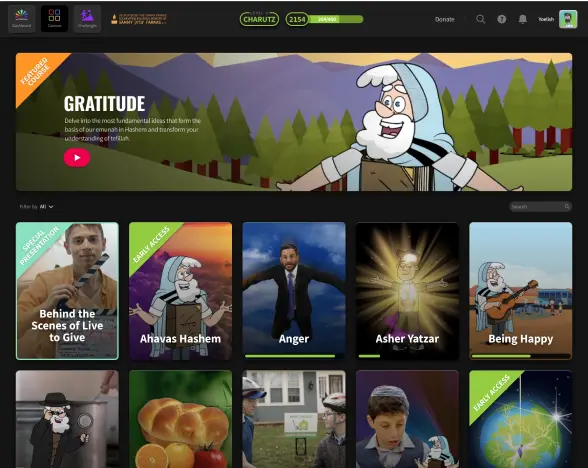
Ready to bring these ideas to life for your whole family? Step into Torah Live's world of stunning videos, games, and challenges that make learning about brachos something kids actually beg for. It's 100% clean, fun, and totally ma'aser approved. Start your family's Torah adventure today and turn screen time into soul time.