Tisha B'Av Videos for Kids: An Age-by-Age Guide for Parents
This is a parent's guide to Torah Live's Tisha B'Av videos for kids. Which films, games, and courses fit which age, and how to use them on the fast itself and through the Three Weeks. If you want one place to start, open From Darkness to Light, our Tisha B'Av course for families.
The trailer for From Darkness to Light, our Tisha B'Av course for families.
It usually happens around three in the afternoon. Your 7-year-old wanders into the room, looks at you sitting on the low chair, and asks, "Ima, why are we sad today?" You have been thinking about the fast, about your own kavanah, about whether the kugel in the fridge will last through the seudah hamafseket tomorrow, and now a small person is standing in front of you waiting for an answer that fits somewhere between a bedtime story and a history lesson. The older kids are quieter but not really engaged. One is scrolling. One is asking when the fast is over. You want them to feel this day, not just wait it out.
That is the real problem parents face on Tisha B'Av. Not the fast itself, and not even the halacha of the day, but the gap between what we want our children to internalize and the tools we actually have to reach them. A book is heavy for a young reader who is already tired and hungry. A dvar Torah from a parent is beautiful but it lands or it doesn't, depending on the child and the moment. What we needed for a long time was something in between. Torah Live was built to be that in-between.
Why Tisha B'Av lands differently for a child
An adult can sit with sadness. We can read Eicha slowly, hear the trop, remember other losses in our own lives, and feel the weight without needing anything to happen. A child cannot do that yet, and it is not a failure of chinuch. It is how attention and emotional processing work at 7, at 10, at 15. Ask an 8-year-old to imagine a Beit Hamikdash she has never seen, in a city she has maybe visited once, being destroyed two thousand years ago, and expect her to cry. That is not how her brain works yet.
What her brain does do well is track a story. She can watch a character she cares about lose something and feel that loss immediately. She can hear a piece of music shift from bright to minor and register the change in her chest before she can name it. She can see a building rise on a screen, brick by brick, and then watch it fall, and understand for the first time what "destroyed" actually means. This is why video storytelling, done well and rooted in real sources, tends to reach a child on Tisha B'Av in a way a lecture does not. It gives her something concrete to be sad about, and something to hope for.
That second half is where a lot of Tisha B'Av content for kids stops short. It teaches the sadness and forgets the arc. Real Tisha B'Av chinuch does not end at the Churban. It ends at the promise. From darkness to light. From mourning to Moshiach. If a course only shows a child the destruction, we are teaching half of a day that Chazal designed to end with nechama. Every course in Torah Live's Three Weeks track is built around that whole arc, because that is what the day is actually about, and because that is what a child can carry with her into the rest of the year.
An age-by-age guide to Tisha B'Av videos for kids
Ages 6 to 8: make it real without making it scary
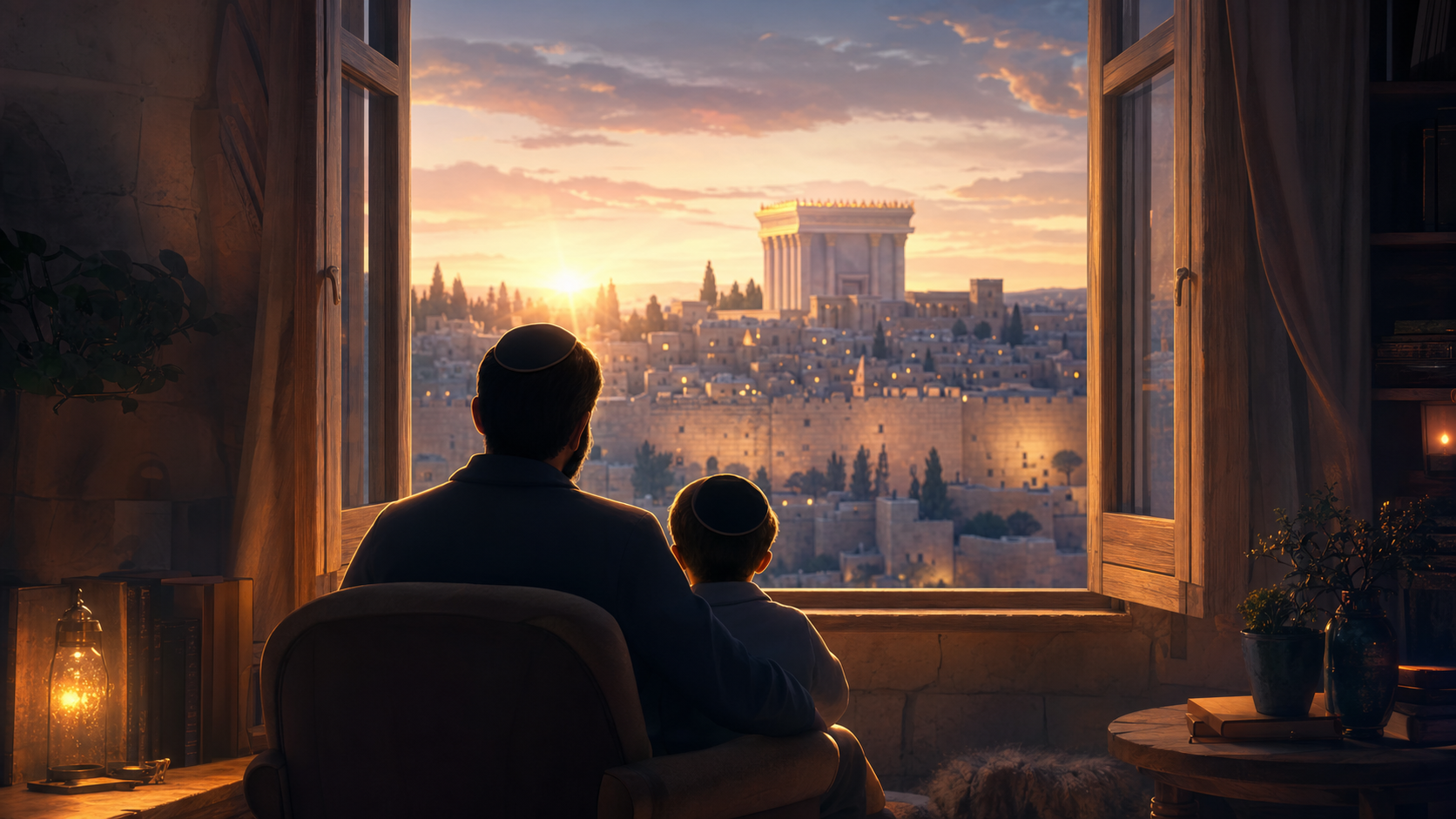
At this age, abstract loss is not going to move a child, and it is not supposed to. What works is a story with characters, images she can hold onto, and a sense that something beautiful existed before something painful happened. Start with the anchor film of the Three Weeks course, From Darkness to Light. The animation is cinema quality, which matters more than it sounds. When a young child sees the Beit Hamikdash rendered with the kohanim moving through it, the mizbeach in use, the pilgrims arriving for the shalosh regalim, she is not looking at a diagram. She is looking at a place, and she will feel it when that place is lost.
The Churban itself is handled with real care in the film. There is no gratuitous violence, no imagery a parent needs to preview and worry about. The destruction is communicated through the emotional beats of the story, the sounds, the change in color and pacing, not through anything a young child cannot process. What she takes away is that something we loved was taken, that Hashem was sad about it too, and that the story is not over. That is exactly the size of the message a 6 or 7-year-old can carry. Twenty minutes at a time is roughly the sweet spot at this age.
Pair the main film with the two interactive games built into the same course, Light the Beis! and Build the Beis!. Kids this age retain the material better when they can move something on a screen, not just watch. The games turn the ideas from the film into something they do, and that is where a 6-year-old actually processes the concept of building versus destruction.
Ages 9 to 12: build the historical picture
Now the questions get bigger. Why did this happen. Who were the players. What was going on in the world at the time. A 9-year-old can hold real historical context, and by 11 or 12 she is genuinely curious about it. The full From Darkness to Light course remains the core for this age band. It goes deeper than a younger child needs and reads at a level a preteen can follow, including the causes of the Churban that Chazal name: sinas chinam, weak leadership, the chances they missed to turn back.
Pair it with Yerushalayim, our course dedicated to the city itself. This is where the "what we are mourning" picture really fills in for a preteen. She learns what the streets of the old city looked like, what happened on Har HaBayis, what the kedusha of the place actually is. When she goes back to From Darkness to Light after that, or watches parts of it a second time, the Churban is no longer an abstract event. It is the loss of a specific place she now knows.
The trailer for Yerushalayim. It makes the city your preteen is mourning feel real.
Two Three Weeks course films work especially well for this age as follow-ups. The Power of Tefillah reframes prayer as the child's actual tool for the arc from galus to geulah, and Living with Emunah grounds the day in the language of trust rather than only loss. Give her the material to think with, and Tisha B'Av can shift from a day of quiet confusion to a day she is actively thinking through.
Ages 13 to 17: relevance and hard questions
Teens want to know why any of this matters now. They can smell a sanitized answer from across the room, and they should. This is the age to hand them the harder material. Prophecies Revealed takes the neviim seriously as historical and spiritual documents, walking through what was actually predicted, what has happened, and what is still ahead. For a 15-year-old wrestling with whether Jewish history is a real arc or just tradition, this course is often the piece that clicks the whole picture into place.
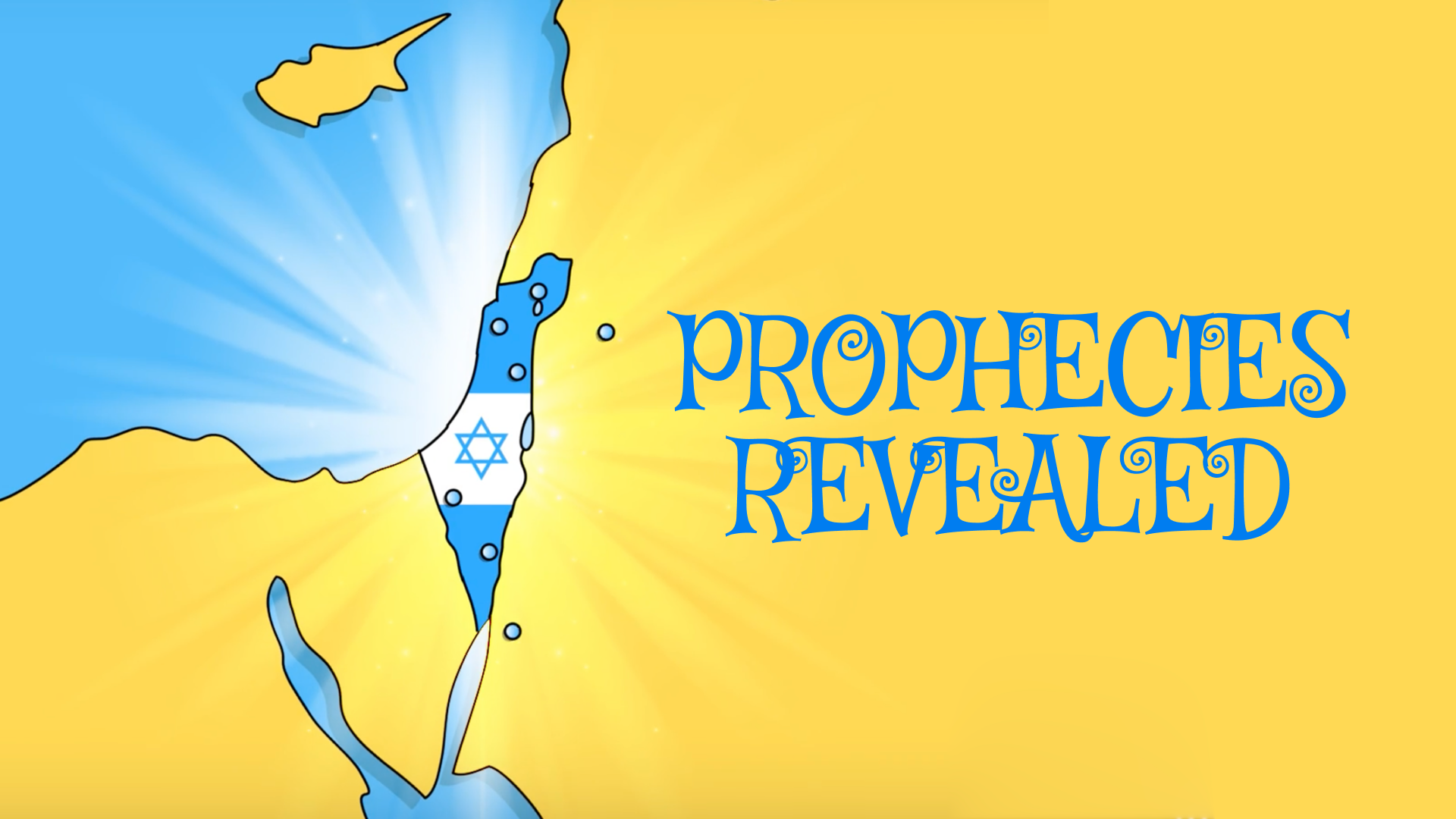
Prophecies Revealed takes teens' hard questions seriously.
Jewish Heroes is the companion for teens who want to see what Jewish courage and clarity look like across generations, not just in the era of the Churban. It grounds the grief of Tisha B'Av in a longer story of a nation that keeps standing back up. And From Darkness to Light stays useful here, often as a rewatch. Teens who grew up on it come back to it with new eyes and catch things they missed as children, especially the parts about the reasons for the destruction and the roadmap out of it. Galus stops being a word from davening and starts being a condition they can actually see themselves inside. For teens ready for one more layer, The Power to Choose sits inside the same Three Weeks course and pushes them on the question of what they do with the reality once they see it.
The trailer for Jewish Heroes. The longer story of a nation that keeps standing back up.
How to keep kids engaged during the fast
Every parent knows the shape of Tisha B'Av. The morning has energy. Kinnos are said. The house is quiet. Then somewhere between one and four in the afternoon, the wall hits. Adults are tired and hungry. Kids are bored. The younger ones who are not fasting are underfoot and cheerful in a way that does not match the day. This is the stretch where a real plan matters more than any single video.
A few things that tend to work. Pace the day in blocks. A block of quiet, a block of learning, a block of watching, another block of quiet. Kids handle a heavy day better when they know its shape. Use Torah Live courses as the anchor of the afternoon block specifically, when everyone is running low and reading is hard. This is exactly what "guilt-free screen time" is supposed to mean. It is not a workaround for parenting. It is the tool that lets a tired child spend an hour absorbing something that is going to sit with her, rendered by real animators, checked by real rabbanim, without you needing to hover.
Want to watch something together right now?
Two full Torah Live lessons are completely open. No account, no payment. The second Beis Hamikdash fell through sinas chinam and lashon hara, so these two lessons from The Power of Speech go straight to the root of the day.
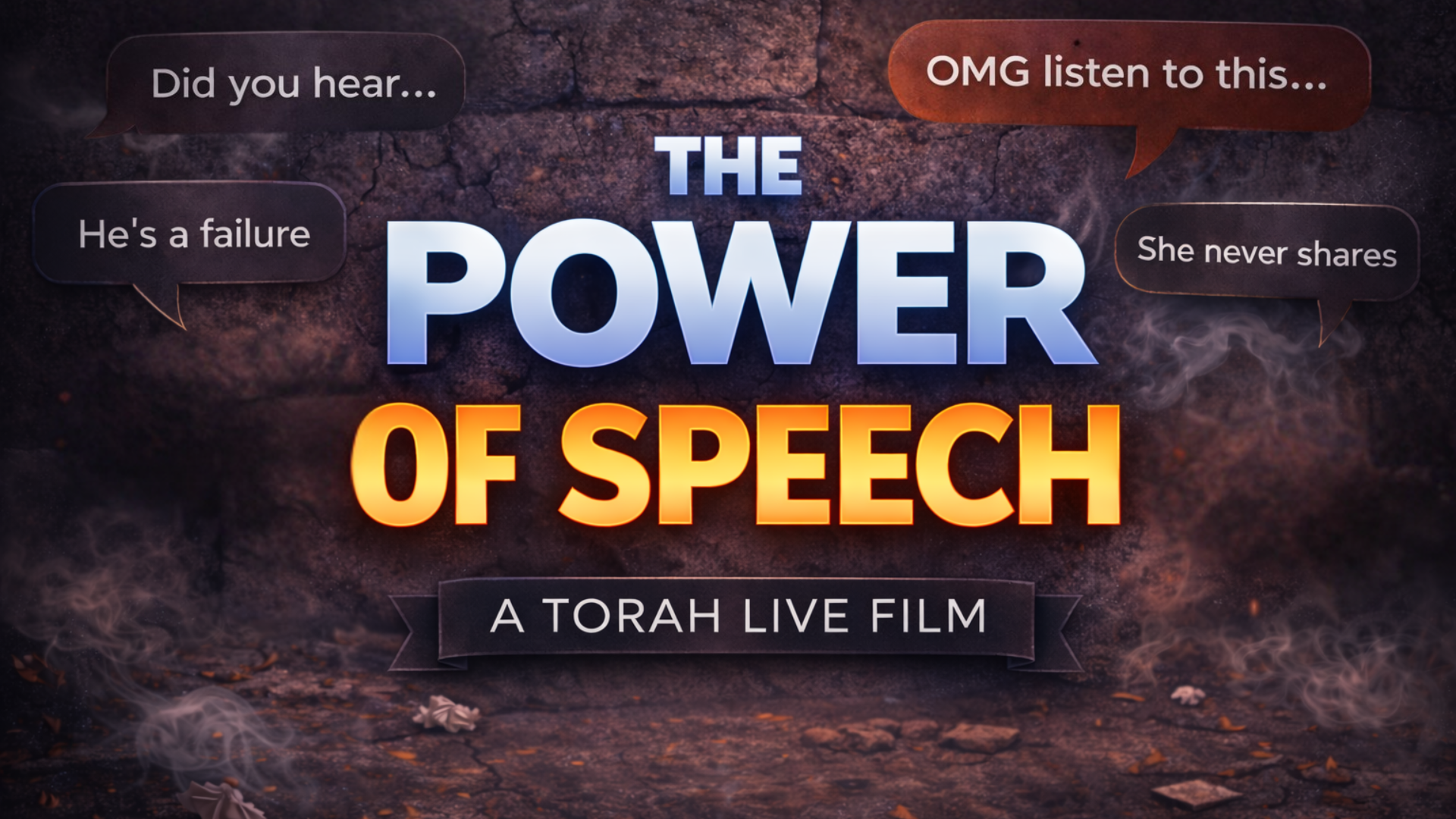
Watch Weapon of War and Introduction with your kids before the fast. It's the fastest way to feel what Torah Live is. When you want more, sign up and watch on. The full Tisha B'Av library is a subscription away.
Mix video with interactive material. Kids do not want to watch content passively for four hours, and they should not. Break longer viewing sessions with a round of Light the Beis! or Build the Beis!, which are the actual Tisha B'Av games built into the Three Weeks course. Follow a course with a sitting-and-talking block. Ask what they noticed. Not a quiz, a conversation. Some of the best Tisha B'Av moments happen when a child brings up a question about something she just watched, and you get to answer it while sitting together on the floor.
For non-fasting younger kids, plan their day separately and in advance. A quiet corner with a stack of Jewish books, a lower-key activity, and a short course of their own from the Torah Live library usually keeps them engaged without pulling the older kids out of the day's tone.
Frequently asked questions
What age should I start showing my child Tisha B'Av content? Around 6 is a reasonable starting point for a short, story-based film like From Darkness to Light. Younger than that, kids do better with a very simple conversation about the day and skipping the harder imagery. Trust your own child's temperament more than any age chart.
Is it okay to let kids watch videos during the fast? Yes, when the content matches the day. Watching a Tisha B'Av course during the fast is not entertainment, it is limmud. The issue with screen time on Tisha B'Av is regular entertainment, not learning material rooted in the day.
How do I explain the Beit Hamikdash to a young child? Describe it as Hashem's house on earth, the one place where the whole Jewish people came together three times a year and could feel Him closest. Concrete images help, and a course like From Darkness to Light does most of the visual work for you.
What do I say if my child asks why God let this happen? The honest answer is that Chazal tell us the Churban came through our own actions, especially sinas chinam, and that Hashem was as pained by it as we are. A young child can hold that answer. Older kids can and should sit with it longer.
How long should Tisha B'Av content be for a 7-year-old? Twenty minutes at a time is a good ceiling. Break longer material into two or three sittings across the day.
Are there Tisha B'Av videos for teens, not just little kids? Yes. Prophecies Revealed and Jewish Heroes are built for teens and adults, and From Darkness to Light holds up as a rewatch at any age.
How do I handle a non-fasting child on Tisha B'Av? Plan their day in parallel. Simpler meals, quieter activities, a short course of their own. The goal is a calm tone in the house, not perfect uniformity.
What is age-appropriate to show about the Churban? Focus on emotional truth, not graphic detail. Torah Live courses are designed with that line in mind and reviewed for halachic and educational appropriateness before release.
How is Torah Live different from just watching a YouTube video? YouTube is a search engine. Torah Live is a curriculum, animated by a real studio, endorsed by rabbanim, with courses that build on each other. For halachic details of the fast and the Nine Days themselves, reference sites like OU.org or Chabad.org are excellent authorities.
Can I use Torah Live courses for the Nine Days too, not just Tisha B'Av itself? Yes. Many families run From Darkness to Light across the Three Weeks as a slow build-up, and use Yerushalayim, Prophecies Revealed, or Jewish Heroes during the Nine Days to keep the tone of the season present without waiting for the fast itself.
Start where your family is
If you have never tried Torah Live, the Family plan is $14.99 a month or $99 for the year, maaser-eligible, with a 100% money-back guarantee. You can sign up today and use From Darkness to Light with your kids this week, before the fast, so the day arrives with something already in place. Every film and game in the Three Weeks course is included, along with the full A-Z course library that will carry your family through the rest of the year. You can also see the full plan on the Family plan page.
The whole point is the moment we started with. A child asking why we are sad today, and a parent who has something real to offer her. Not a script. Not a screen for the sake of a screen. A story she can actually hold, ending in the light we are waiting for.